Metal cutting
From a raw enquiry to a part you can price.
Steel, stainless, aluminium: cutting enquiries arrive in bulk, by email, usually without a usable drawing. Koventor turns them into parts you can price, with your material, your thicknesses and your machine times.
Demo with no account, fictional prices: nothing reaches a workshop.
What your customers actually send
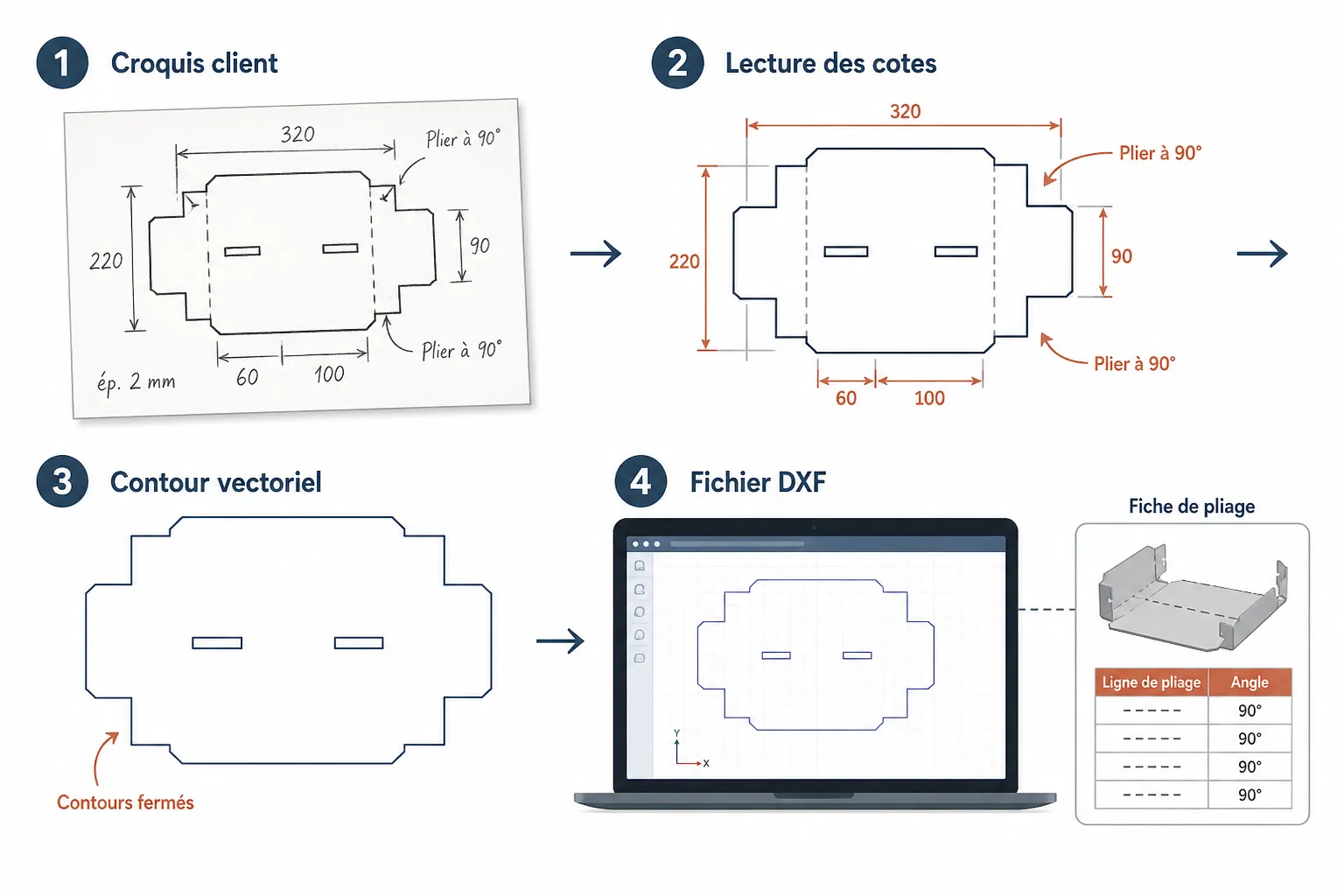
A hand-dimensioned sketch, an approximate DXF, a photo of a part to reproduce, or a request for drilled plates described in three lines of an email.
None of these formats is a production file. They are nevertheless what you have to price from, and that is exactly where Koventor starts.
What the pricing has to produce
The parameters specific to your trade, the ones that decide whether a price holds.
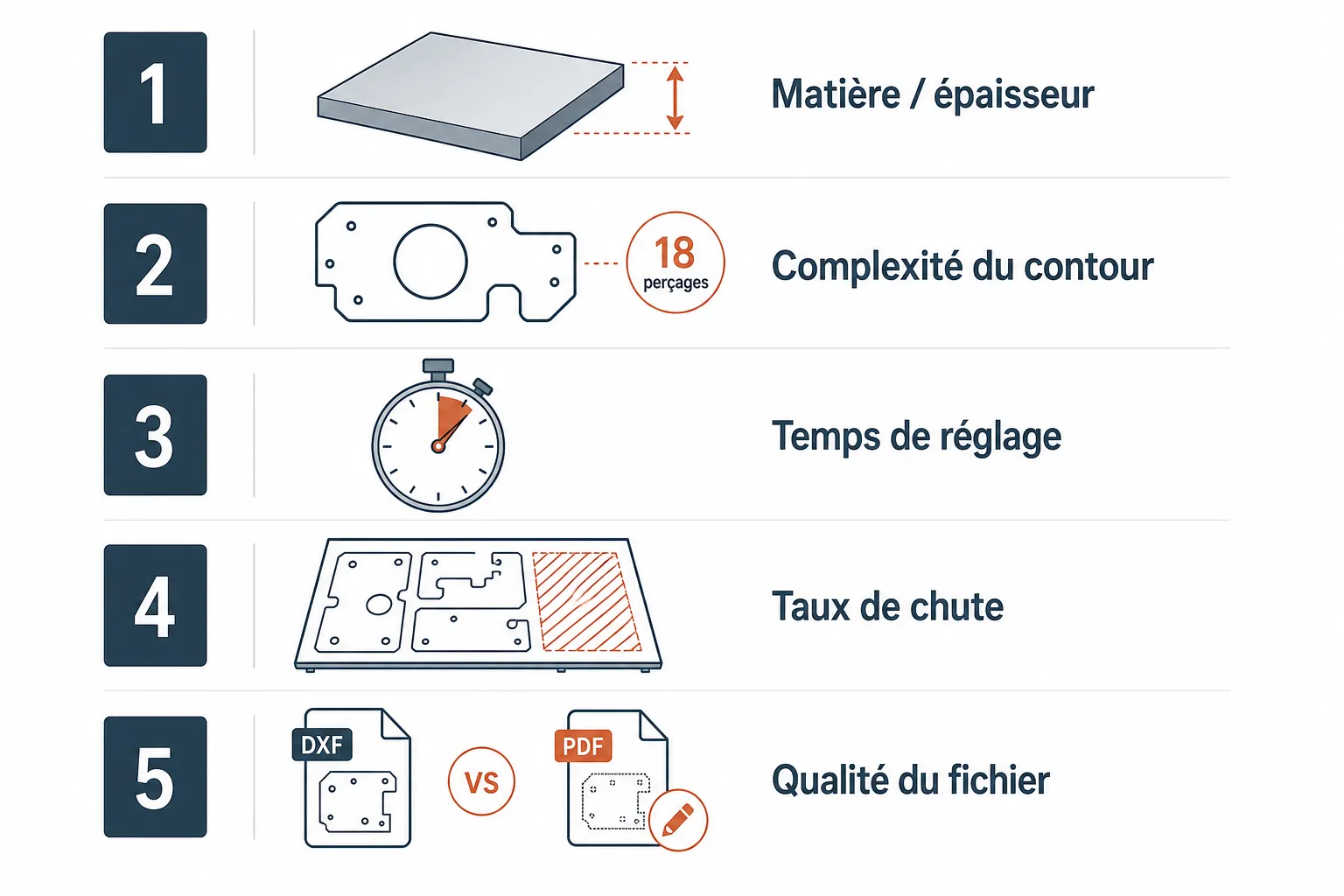
Grade and thickness
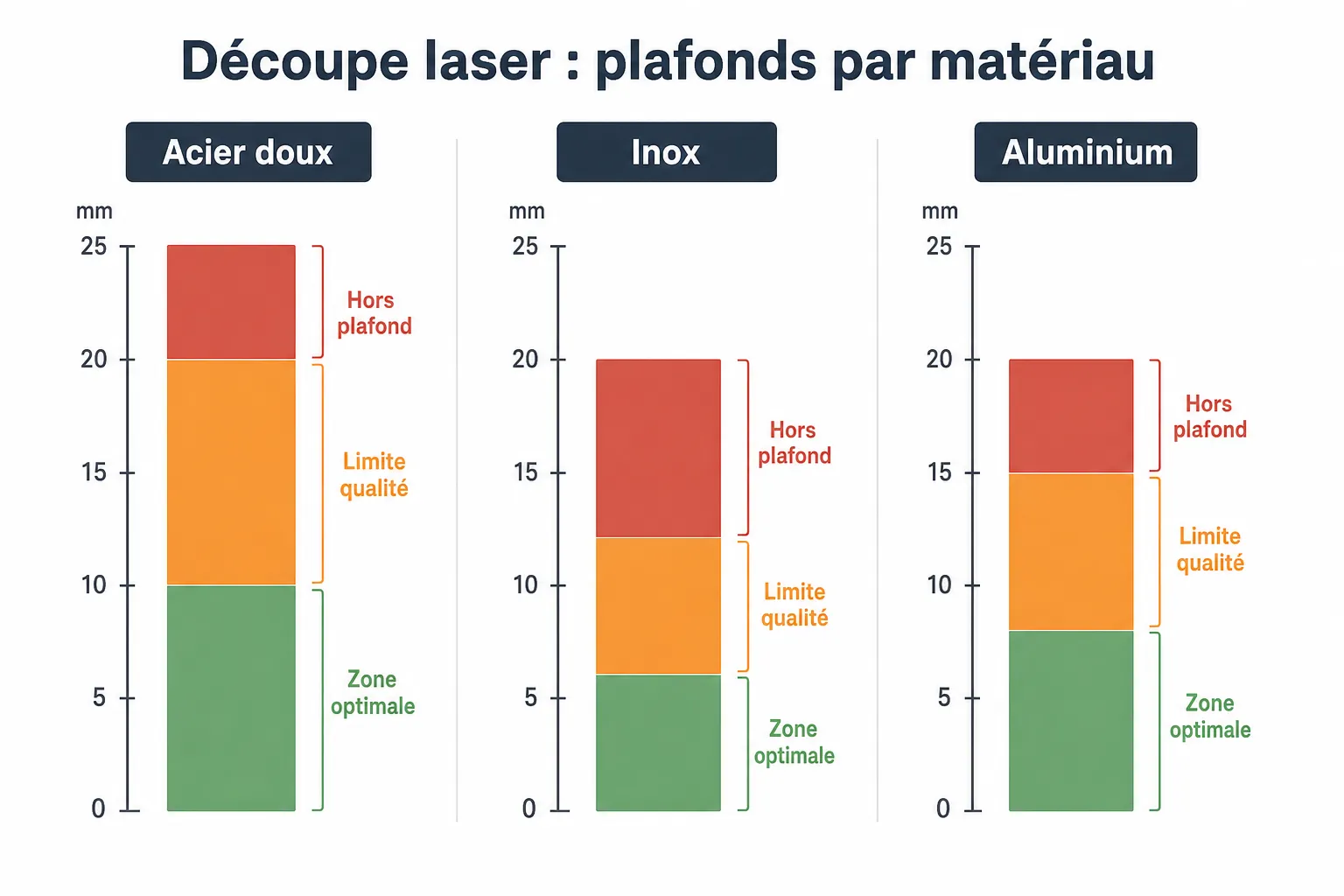
Steel, 304 or 316 stainless, aluminium: the price per kilo, the cutting speed and the assist gas change for each. It is the first parameter to lock down, and often the one the customer forgets.
Cut perimeter
Machine time follows the perimeter, not the area. A part full of cut-outs costs more than a solid part of the same footprint, which surprises the customer every single time.
Material committed
What gets invoiced is the sheet consumed, nesting included. On a one-off, the offcut is a cost line in its own right.
Operations after cutting
Deburring, tapped holes, bending, surface treatment. Each is a distinct operation, with its own time and its own risk.
What actually bites, and what a generic rate card ignores
The stated tolerance changes the process
A tenth-of-a-millimetre dimension cannot be held on plasma. Accepting a tolerance without checking the process means promising a precision the workshop will not be able to deliver.
The customer's DXF is rarely clean
Duplicate contours, open polylines, wrong scale. A file that opens is not a file you can cut, and checking it takes time before you even start pricing.
Stainless forgives less
Scratches, rework, grain direction: on visible stainless the finish counts as much as the cut and must appear on the quote, or it will be demanded without having been paid for.
500 searches a month
“custom metal cutting” 170 times a month in the United States, “custom laser cutting service” 170 more at $12.54 a click in LOW competition, which is the rarest combination of the five trades. Modest volume, direct purchase intent.
Common questions
The customer sends a DXF. Do you take it as it is?
It is read, and it is also checked: open contours, duplicates, inconsistent scale. A problem file is flagged before pricing, not discovered when the machine is about to start. The subject is covered in our article on DXF files.
How does the price account for offcuts?
By the nest estimated on your sheet format, not by a flat ratio. That is the difference between a price that holds on a one-off and a price that only holds on long runs.
Is it suitable for industrial subcontracting?
Yes, that is the original use case: many short enquiries, each too small to justify an engineering study, and all of them together enough to saturate the office.
The other trades
What this would look like on your quotes
Try the demo for your material, then tell us about your workshop: we look at one or two of your recent quotes together and show you what the system makes of them.