Roof flashings
Your customers draw their flashings online. Your shop gets the order, priced.
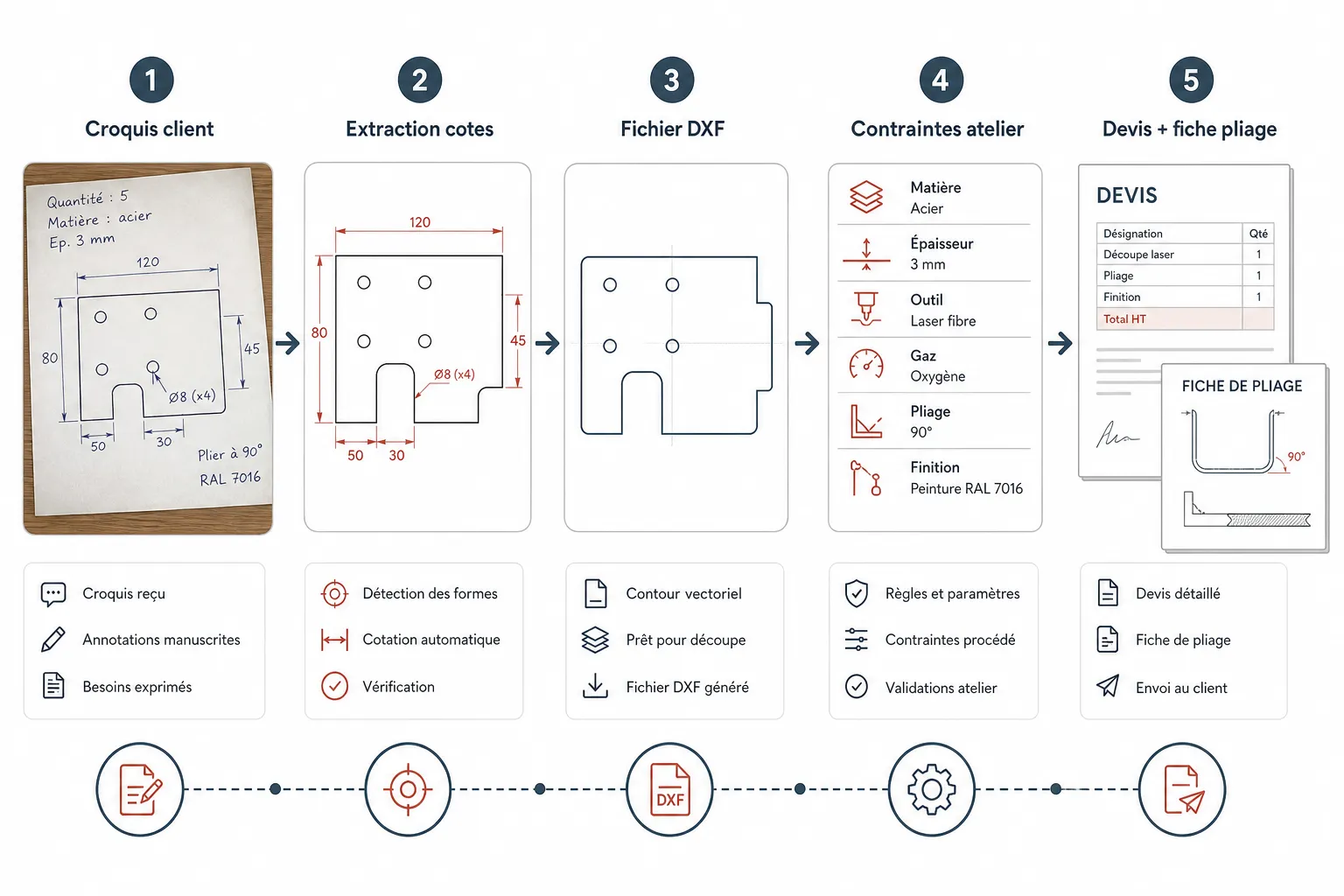
Roofers, roof plumbers and builders draw the flashing or capping they need, or send a photo of their sketch. Koventor checks it can be folded on your machines, prices it on your rates and hands your shop a complete job: quote, DXF and bend sheet. It runs on your website, under your name.
Live demo, fictional prices: nothing reaches a workshop.
Real screens from the demo. Demo pricing, for illustration only.
The presentation film
The whole workflow, chapter by chapter.
One part followed from the sketch to the shop documents, on the real screens. Click a chapter to go straight to it.
1. The problem · A sketch, a missing dimension, emails piling up.
What your customers actually send
A flashing drawn on an offcut of ply and photographed, a list of cappings in a text (“6 lengths at 3 m, girth 300, two folds”), a profile on the back of a delivery docket, often with no colour or one dimension short. The people ordering flashings are roofers, roof plumbers, builders and cladders: they know the profile, rarely how to write it down cleanly.
None of these formats is a production file. They are nevertheless what you have to price from, and that is exactly where Koventor starts.
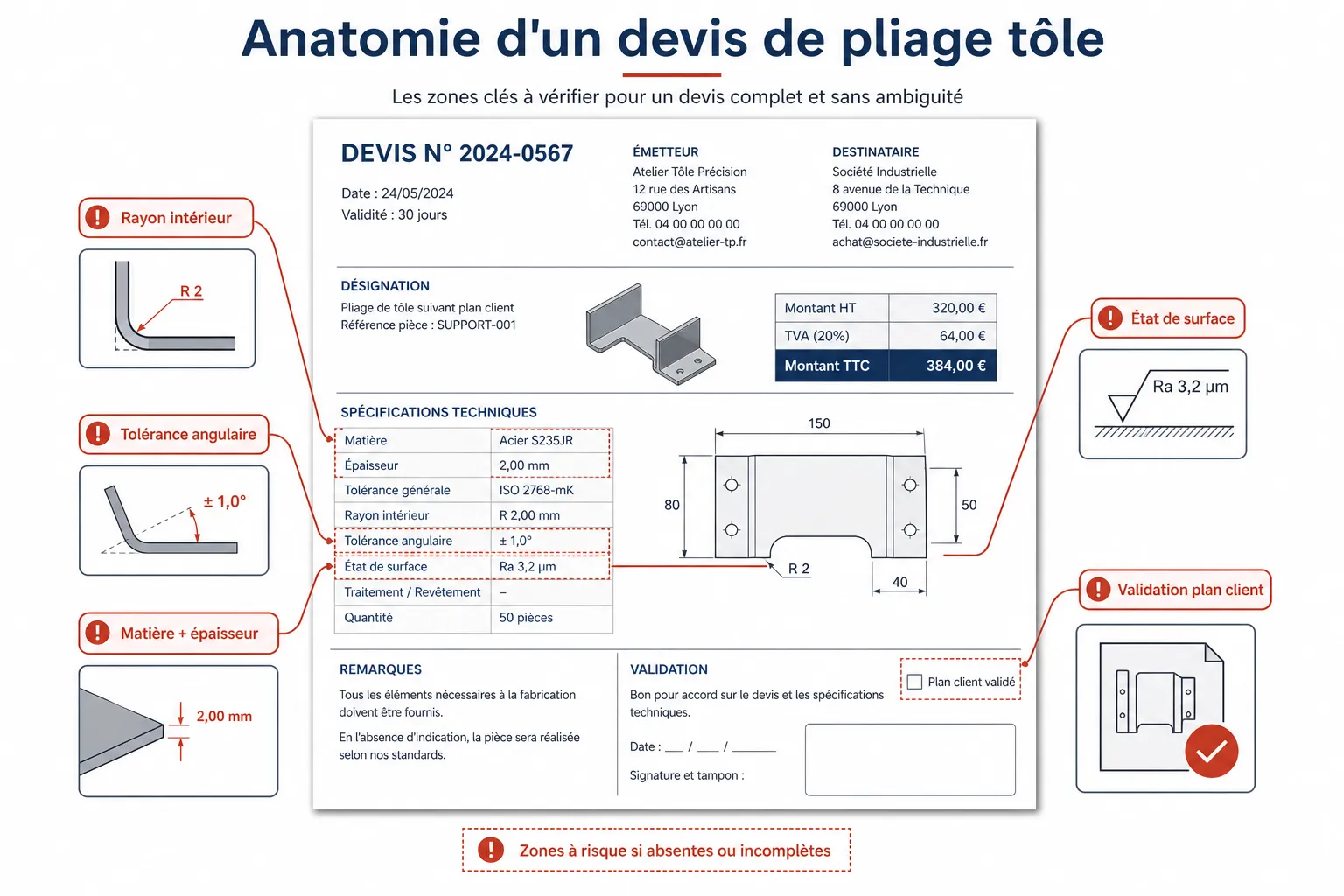
What the pricing has to produce
The parameters specific to your trade, the ones that decide whether a price holds.
The flashing, fold by fold
Each leg with its length and angle, seen in section, in 3D and flat. Cappings with a drip, flashings, angles, trims, L, U, Z and top-hat profiles: the customer builds the shape or picks it from your catalogue, and adds holes on the flat view.
Material, thickness and colour
Coated steel (customers often ask for it by brand, Colorbond® for one), galvanised or bare steel, Corten; mill-finish, pre-painted or anodised aluminium; stainless, zinc and copper. Each comes with the thicknesses and colours you actually stock, and its own price.
Your folder's limits
Maximum length on your folder and on your sheet size, minimum angle, flange limits: a flashing that cannot be folded is refused on screen, with the reason, before anyone in the office has to look at it.
Your prices, not a generic rate
Material, number of folds, holes, delivery and margin come from your own price list, which you adjust in the admin area. Material use is estimated from your sheet size, so the offcut is in the price.
Colorbond® is a registered trade mark of BlueScope Steel Limited. Koventor is not affiliated with or endorsed by BlueScope.
What actually bites, and what a generic rate card ignores
The tool belongs to the shop, not to the roofer
An ordering app on the roofer's phone sends you a drawing, and you still have to price it. Koventor sits on your website, with your materials, your machines and your prices: the customer sees your price, and the job lands with you, complete.
One missing dimension stalls the job
The girth cannot be worked out without every leg. Koventor asks the customer once, in writing or by voice, and the price waits for the answer instead of guessing.
Colour side out
On coated sheet the colour side has to face out once folded. The configurator marks it on the profile, and it is printed on the bend sheet the operator works from.
Common questions
How is this different from a flashing app my customers already use?
Those apps live on the roofer's phone and send you a drawing. Koventor lives on your site: it applies your machine limits, prices with your list and hands your shop the quote, the DXF and the bend sheet. The customer relationship and the pricing stay with you.
Can customers order without phoning?
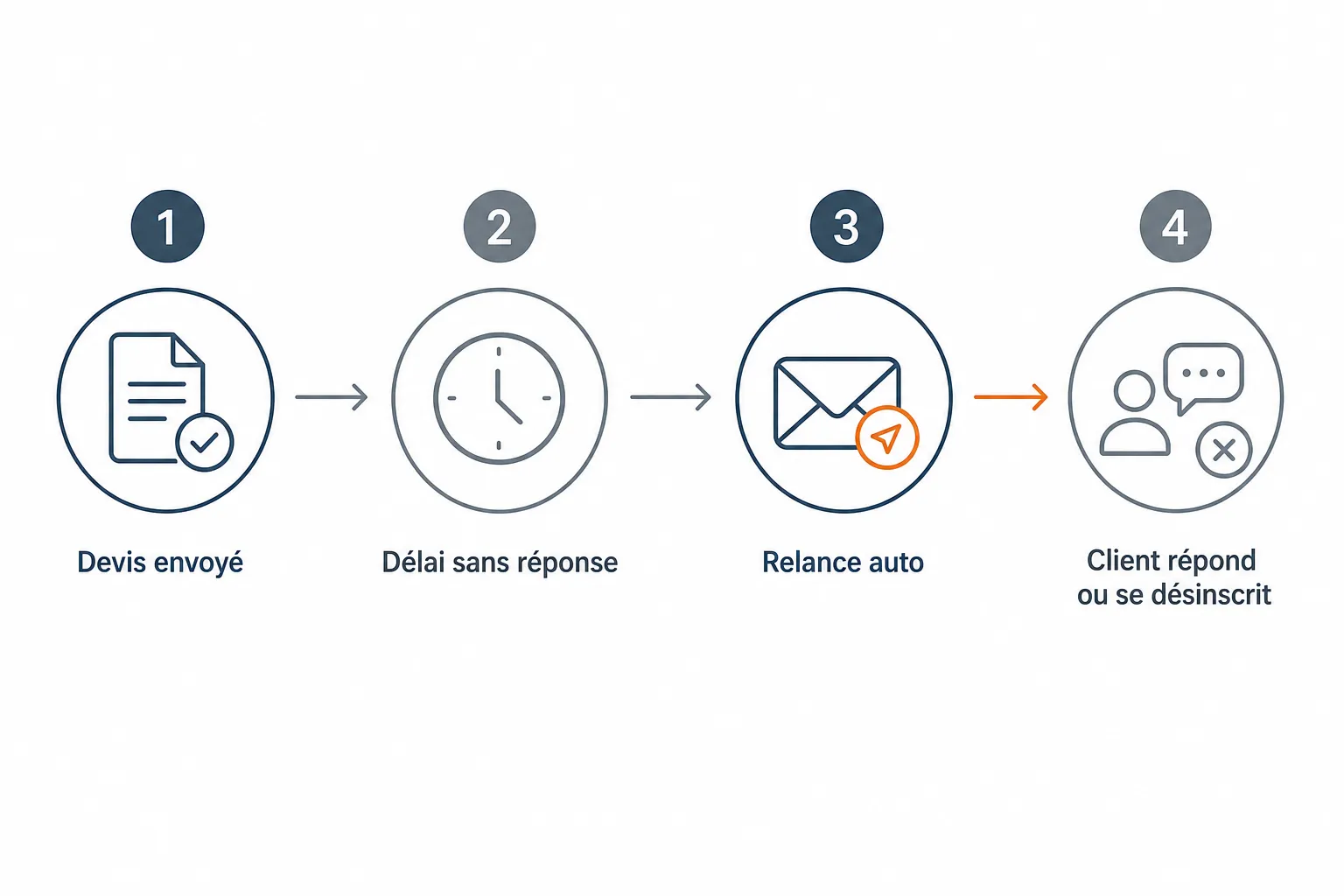
Yes. They draw or upload, answer the one question if a dimension is missing, see the price and send their request. Nothing becomes an order until your shop confirms it, and the order acknowledgement goes out as a PDF. Quotes left unanswered are followed up on their own.
Does Koventor program my folder?
No. It produces the quote, the DXF and a bend sheet that lists each fold for the operator. Programming the machine stays with your shop and your usual software.
Is it metric?
Yes, millimetres throughout. Your materials, thicknesses, colours and prices are loaded at installation, which is done with you.
Can the AI misread a sketch?
Yes, as a person can with a badly written sketch. That is why it flags what it could not read instead of guessing, and why the flashing stays visible in 3D and flat before any request is sent.
The other trades
What this would look like on your quotes
Try the demo for your material, then tell us about your workshop: we look at one or two of your recent quotes together and show you what the system makes of them.